'500 and '600 in Maratea
FREE CITY
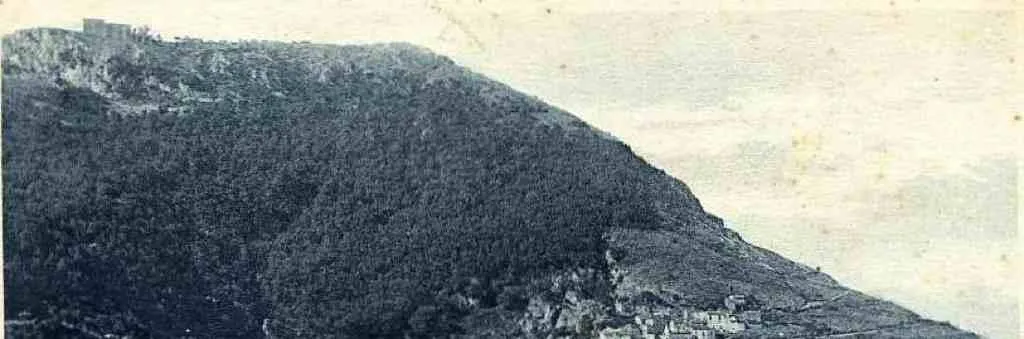
The freedom and privileges of the city were always defended by the people, and when in 1530, count Ettore Carafa of Policastro purchased Maratea from the royal domain, the citizens regained their privileges by paying the king double the amount of money paid by the count.
The inhabitants of the little town lived off shepherding and agriculture, which were practiced in the valley below the mountain.
Some farmers from ancient Maratea, tired of the constant going up and down the mountain, settled on the northern terraces of Mount San Biagio, giving birth to a new little town, invisible from the sea because hidden by the mountain's slopes.
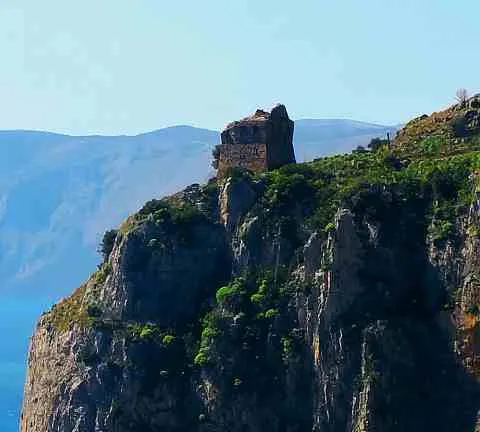
Coastal Tower of Acquafredda
The website www.maratea.info is updated by the volunteers of ALTRITURISMI.it
MAKE A DONATION
- To stay updated on the activities of AltriTurismi ETS -> Subscribe to the newsletter
THE VILLAGE
Over the centuries, the new Maratea, nicknamed by the people "the Borough," had become so much larger and more populated than the ancient one, which was instead nicknamed "the Castle" because it was fortified, that during the sixteenth century it was elevated to the status of city.
The two cities, which in official documents assumed the designation of Maratea Superiore and Maratea Inferiore, each had their own mayor and independent collegiate bodies, but continued to constitute a single community and a single territory, as confirmed by the Municipal Statute, a document that is now lost.
The website www.maratea.info is updated by the volunteers of ALTRITURISMI.it
MAKE A DONATION
- To stay updated on the activities of AltriTurismi ETS -> Subscribe to the newsletter
THE TOWERS
For further protection from attacks by Saracen pirates, between 1566 and 1595 six watchtowers were built along the coast: the Torre dei Crivi, Torre di Acquafredda, Torre «Apprezzami l’Asino», Torre di Santavenere, Torre di Filocaio, and the Torre Caina.
The Saracen threat did not prevent the marateots from engaging in maritime trade, which generated a modest economic prosperity.
Seventeenth-century Maratea's economy was in fact the strongest in Basilicata and one of the most flourishing in Southern Italy.
On May 21, 1626, the "Borgo" of Maratea was put under siege by 160 bandits who attempted to plunder the lower city.
After three hours of urban battle, which caused the death of citizen Diego Mari, the assault was thwarted by soldiers from the "Castle," who drove the bandits away with cannon fire.
Following the plague epidemic that ravaged Basilicata in 1656, the ancient village of Maratea Superior began a slow and inexorable depopulation in favor of Maratea Inferiore.
On the religious plane, churches multiplied, and lay citizens tended to gather in religious confraternities according to their trade, such as that of S. Crispin and Crispinian (which brought together shoemakers) and that of the Madonna del Portosalvo (fishermen).
Only the Confraternity of the Addolorata survives to this day.
Italy's last travel frontier
A NEW WAY TO EXPLORE THE CITY
AN ENTRING TREASURE HUNT
that unites the entire family in fun
MARATELL. THE LEGACY OF THE SARACEN
A StreetAdventures™ necklace adventure