
Flora, vegetation, and ethnobotanical traditions of Maratea
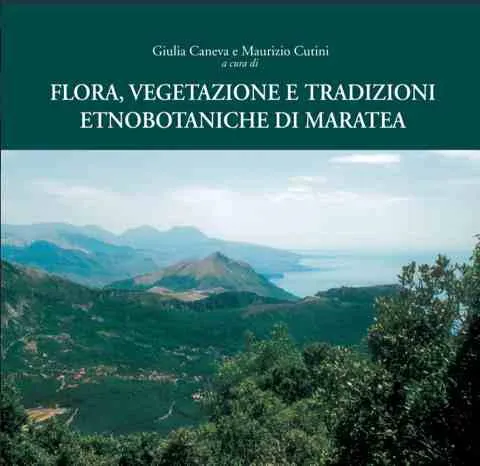
"Flora, vegetation and ethnobotanical traditions of Maratea"
Author: Giulia Caneva, Maurizio Cutini (edited by)
Series: Architecture, Urban Planning, Environment
Year of Publication: 2009
Pages: 176
GANGEMI EDITORE
MARATEA IS NATURE
Certainly, and with great suggestion, Maratea enters the imaginary of places where beauty merges with the values of nature. Often, and more frequently than one might think, the "beauty" of a territory and landscape also express significant aspects beyond the purely aesthetic, including natural, historical, and therefore tourist, significance due to unique features. Characterizing this Tyrrhenian coast of Basilicata solely by its coastal features would be a partial perspective given the rich natural, scenic, and cultural values it presents. This territory is, in fact, the result of a balance based on the interaction of traditional pastoralism practiced for centuries in the hinterland, predominantly family cereal farming, and respectful tourist development. This explains the limited presence of human settlements, which has favored the maintenance of a highly diverse and interesting natural vegetation landscape, characterized by endemic species of particular importance. Another noteworthy element is the perfect blend of Mediterranean and temperate flora, in a remarkable equilibrium that varies morphologically and structurally from the coastal strip to the highest elevations, also a result of the abandonment of some traditional practices and changes in land use over the past decades. Within this, the cultural conservation value of this territory is highlighted by the local population's significant knowledge of plant species and their use in traditional medicine and religious practices. On these diverse specificities, the ideal path proposed in this volume unfolds, aiming to highlight some of the most characteristic aspects of local culture and nature.
THE AUTHORS
GIULIA CANEVA, full professor of Botany and Plant Ecology at the Department of Environmental Biology of Roma Tre University. Author of hundreds of publications in national and international contexts, she conducts research in the field of Mediterranean thermophilous vegetation and related cartography, as well as ruderal flora and vegetation. She has developed numerous studies in the field of applied plant biology for the conservation of works of art, with particular regard to the biological degradation of stone materials and botanical management of archaeological sites. She is the editor of the Landscape series: Nature, Culture and Art, within which she published The Vegetal Landscape of the Amalfi Coast (Gangemi Ed., Rome 2007).
MAURIZIO CUTINI, graduate in Natural Sciences, is currently a Researcher at the Department of Environmental Biology of Roma Tre University. He teaches Nature Conservation and Plant Ecology and focuses his research primarily on topics of Phytosociology and Phytogeography, studying plant communities through floristic and synecological surveys, their distribution and dynamics in central and southern Italy. Since 1992, he has been a member of the Italian Botanical Society (SBI) and the Italian Society of Vegetation Science (SIVS) and is the author of over thirty scientific publications in national and international journals, as well as several popular science publications.
SUPPORT US | DONATE | PARTICIPATE
The website www.maratea.info is updated by the volunteers of ALTRITURISMI.it
MAKE A DONATION
- To stay updated on the activities of AltriTurismi ETS -> Subscribe to the newsletter