
Maratea Garum
Garum, a Roman sauce
Roman cuisine of the late Republican and Imperial periods - that is, from the 2nd and 1st centuries BC - was greatly influenced by Greek traditions, including the use of "garum" (known to the Greeks as "garon"), the famous fish sauce that Apicius in his famous cookbook, the only Roman cookbook to survive to this day, proposes as an indispensable complement to almost all the recipes presented.
Garum first appeared in Rome only during the Punic Wars, after having been widely produced in Carthage and Numidia, present-day Algeria. This sauce quickly gained popularity and, from the 2nd century BC, triumphantly entered Roman cuisine. But what exactly was it? Numerous sources have described it. Pliny describes: "Another type of prized liquid, called garon, is made from the intestines of fish and other parts that would normally be discarded, macerated in salt, so that they become the dregs of putrefaction". He goes on to list varieties of garum, emphasizing that the finest is made from mackerel in the fisheries of Carthage Spartaria.
Other regions such as Mauretania and Baetica also caught mackerel from the ocean, producing good garum in Clazomenae, Pompeii and Leptis. The Greek geographer Strabo confirms Pliny's information, mentioning the island of Hercules, called Scombaria for the catching of mackerel, from which the best garum is made.
However, not everyone appreciated this sauce. Seneca, in a letter to Lucilius, criticizes garum, calling it a "precious paste of spoiled fish". Plato defines it "rotten", while Martial satirizes its unpleasant smell in describing a friend's breath.
Garum could also be used as a digestive, known as Oxygarum, whose recipe included pepper, barley, cardamom, dried mint, honey, and vinegar. Presumably, the garum had a strong fish and herb aroma. Today, it could be compared to the anchovy sauce of Cetara or the nuoc mam, a fish sauce used in Southeast Asia.
Maratea. A Garum Factory?
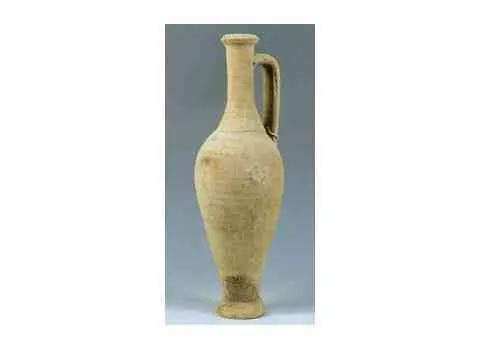
During archaeological excavations carried out in Maratea, artifacts from Roman times have been found that refer to the methods of preparation and preservation of this famous ingredient of ancient Roman cuisine.
Such artifacts, for example, on the island of Santo Janni, suggest that Maratea was one of the most important "production centers" of this food along the entire Tyrrhenian coast.
jar for the transportation of garum
But what is "garum" actually?
To do this, alternate layers of blue fish (mackerel, sardines, etc.) with layers of herbs (dill, fennel, mint, etc.), adding a lot of salt to each layer and pressing it all down.
Within a few days, a light brown liquid collects at the bottom, which keeps for an extremely long time and is suitable for seasoning any dish.
The preservation characteristics of "garum" made it ideal even for long sea voyages that transported it from Maratea to the tables in Rome.
From an olfactory point of view, "garum" is a delicate flavored sauce, to be used in tiny amounts, drop by drop, even as a salt substitute.
For some it is similar to anchovy sauce, for others to worcester sauce; for others still the taste is closer to "nuocnam," a sauce usually used on almost all dishes in Vietnamese kitchens.
The website www.maratea.info is updated by the volunteers of ALTRITURISMI.it
MAKE A DONATION
- To stay updated on the activities of AltriTurismi ETS -> Subscribe to the newsletter