Prehistory and Protohistory
THE FIRST TRACES IN PREHISTORY
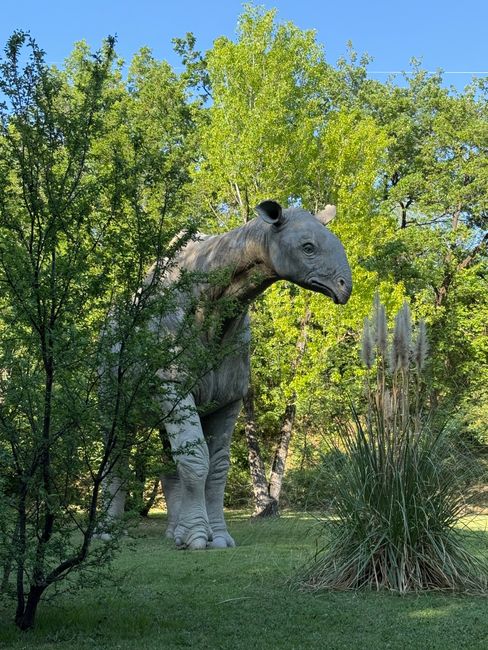
The oldest human settlements found in the territory of Maratea are those of the Fiumicello caves, where speleological research has found finds of lithic industry, such as scrapers and splinters of quartzite, dating back to the Middle Paleolithic; and remains of Pleistocene fauna, including those of a Rhinoceros spaelaeus.
Early History
Although the Fiumicello caves were used as burial places until the Bronze Age, in the proto-historic period, the small promontory of Capo la Timpa became a meeting point between the first navigators of the Mediterranean and the peoples natives of Lucania.
The first Village
In the 15th-16th century BC, the first village was established on the southern slopes of the promontory, consisting of huts with central hearths, uncovered by archaeological excavations conducted between 1989 and 1991 by Dr. P. Bottini.
The inhabitants, likely transhumant shepherds of the so-called "Apennine culture," who subsequently engaged in trade due to Mycenaean navigation, lived off maritime trade established with the nearby Aeolian Islands and surrounding areas, acting as intermediaries between navigators and inland populations.
Ancient times
After an apparent abandonment of the site following the founding of the first Magna Graecia colonies, in the 4th century BC the village produced pottery and imported goods in pottery, as evidenced by the finds of fragments of Greek-Italian, Greek-Oriental, black-glazed ceramics, and glass paste vessels, testifying to trade that extended from Greece itself to Lycia.
The archaeological research has not yet clarified where the necropolis or the corresponding seaside settlement should be located on the promontory, although convincing evidence suggests that the area known as Maremorto, where a modern harbor was later created, was the settlement's harbor.
A necropolis has been discovered in the current fraction of Castrocucco, with a chronology ranging from the 4th-5th century BC to the Middle Ages.
A farmstead with an attached production facility, dating back to the Roman period, has been discovered in the plain of Massa.
The website www.maratea.info is updated by the volunteers of ALTRITURISMI.it
MAKE A DONATION
- To stay updated on the activities of AltriTurismi ETS -> Subscribe to the newsletter
Treasure Hunt
A NEW WAY TO EXPLORE THE CITY
AN EXCITING TREASURE HUNT
that unites the entire family in fun
MARATEA: THE SARACEN’S LEGACY
A StreetAdventures™ necklace adventure